

Socrates: Question Injustice

APPLE PODCASTS | SPOTIFY | YOUTUBE
Embarking on a journey through the history of ancient Athens brings us face to face with Socrates, the foundational pillar of Western philosophy. Through a captivating exploration, we delve into the life, thoughts, and enduring legacy of a man whose quest for knowledge and dedication to the pursuit of truth forever altered the course of intellectual history.
Subscribe on Patreon for just $2
Unlock early access to shows and exclusive merch with our Patreon. Become a Humanity Archiver today.
Socrates: The Pillar of Western Philosophy and His Enduring Legacy
In the heart of ancient Athens, amidst the birth of democracy and a burgeoning era of intellectual curiosity, Socrates emerged as a foundational pillar of Western philosophy. Unlike any before him, his relentless quest for knowledge and his profound commitment to questioning the essence of virtue, justice, and the good life laid down the principles that would shape philosophical thought for millennia to come. This exploration delves into the life, methodologies, and enduring legacy of a man whose legacy transcends time.
The Athenian Context: A Cradle of Democracy
Athens, in the 5th century BCE, was a tapestry of innovative thought and political experimentation. It was here, in this cosmopolitan city-state, that democracy took its first steps, influencing Socrates and his contemporaries profoundly.
Democratic Ideals: Athens' democratic government provided a unique backdrop for Socrates' philosophies. His interactions in the Agora, the heart of Athenian democratic life, underscored his belief in the power of dialogue and debate.
Cultural Milieu: The city's openness to new ideas and its vibrant intellectual scene set the stage for Socrates' dialectical method, which thrived on the free exchange of ideas.
Socrates' Philosophical Journey
Socrates' philosophy was marked by an insatiable thirst for knowledge and an unyielding drive to understand human existence at its core.
In Search of Virtue: Through his interactions with Athenian citizens, Socrates sought to unravel the complexities of virtue and ethics, challenging assumptions and encouraging a deeper inquiry into one's moral compass.

The Socratic Method:
The Socratic Method, a cornerstone of Western philosophical thought, stands as a testament to Socrates' profound impact on the realm of intellectual inquiry. This method, a distinctive form of cooperative argumentative dialogue, revolutionized the approach to education and knowledge acquisition in ancient Athens and beyond. Rather than simply imparting information, Socrates engaged his interlocutors in deep, reflective questioning, challenging them to examine and articulate their thoughts and beliefs rigorously.
At its core, the Socratic Method is a pursuit of fundamental truths through a dialectical process. Socrates, with his relentless questioning, sought not just to uncover inconsistencies in thought but to propel individuals towards greater self-awareness and intellectual autonomy. This method emphasizes the importance of acknowledging one's own ignorance—a pivotal step towards genuine understanding and wisdom.
Employing this method, Socrates navigated the complex landscapes of ethics, justice, and virtue, among other philosophical themes, with his fellow Athenians. His approach was not about leading participants to a predetermined conclusion but encouraging a deeper engagement with the subject matter, thereby fostering a culture of inquiry that valued the process of discovery over the mere possession of facts.
The enduring legacy of the Socratic Method lies in its emphasis on critical thinking and active learning. It challenges assumptions, prompts reevaluation of beliefs, and cultivates an intellectual humility. In classrooms, legal practices, and philosophical debates today, the echoes of this ancient method continue to inspire a quest for knowledge that is both reflective and transformative, emphasizing that the journey to understanding is as crucial as the destination.
The Myth and The Man
The figure of Socrates is shrouded in mystery, with the lines between the man and the myth often blurred. His life, as recounted by his students Plato and Xenophon, presents a figure of immense intellectual and moral stature.
The Socratic Problem: Given that Socrates never wrote down his teachings, our understanding of his philosophies comes primarily from his disciples. This secondary nature of sources leads to the "Socratic Problem," where discerning the philosopher's authentic voice becomes a challenge.
Mythical Aspects: Legends surrounding his divine sign or daimonion and his purportedly humble origins add layers of complexity to his persona, merging the historical with the mythical.
Socrates and Athenian Youth
Socrates' influence on the youth of Athens was profound but also controversial. His method of questioning traditional values and encouraging free thought alarmed the Athenian establishment, who viewed him as a corrupting force.
Mentorship and Influence: Many of Athens' young elite were drawn to Socrates, captivated by his teachings on virtue, justice, and the importance of a life examined.
Controversy and Criticism: His approach, however, was not without its critics. The same qualities that endeared him to many led to suspicion and animosity among some sectors of Athenian society, setting the stage for his eventual trial.

The Trial of Socrates
Socrates' trial in 399 BCE marks one of the most infamous legal proceedings in history. Charged with impiety and corrupting the youth, his defense, as chronicled by Plato, encapsulates his unwavering commitment to his principles.
The Accusations: The charges against Socrates were reflective of broader tensions within Athenian society, grappling with the aftermath of the Peloponnesian War and an uncertain future.
Socrates' Defense: His eloquent defense, immortalized in Plato's "Apology," remains a powerful testament to his philosophy and his dedication to the pursuit of truth, regardless of personal cost.
The Legacy of Socrates
The execution of Socrates by consuming hemlock is a moment etched in the annals of history, not as an end but as the beginning of a philosophical legacy that continues to influence to this day.
Foundations of Western Philosophy: Socrates' teachings and method laid the groundwork for his students, Plato and Xenophon, and set the course for Western philosophical thought.
Eternal Questions: The issues Socrates grappled with—ethics, the nature of knowledge, the ideal society—remain central to philosophical inquiry, testament to his enduring relevance.
Inspiration Across Ages: From the Renaissance to the modern era, Socrates' commitment to living a life of inquiry and integrity continues to inspire those who seek to understand the essence of truth and the virtues of a life well-examined.
Socrates' life and philosophies offer a beacon of wisdom in an often tumultuous world. His methods of inquiry, his dedication to the pursuit of knowledge, and his courage in the face of adversity provide enduring lessons on the value of questioning, the importance of ethical living, and the pursuit of a meaningful existence. As we navigate the complexities of the 21st century, Socrates' legacy invites us to reflect deeply on our beliefs, to engage in meaningful dialogue, and to strive for a deeper understanding of the world around us. In the story of Socrates, we find not just the roots of Western philosophy but a timeless guide for living with purpose and integrity.
Research & Reading List

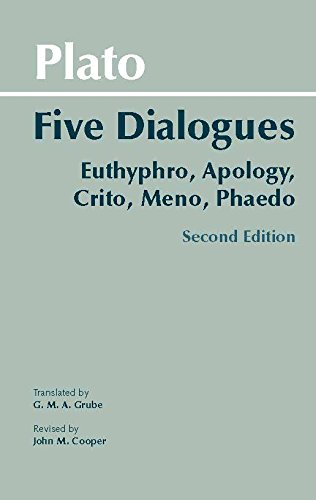
-
Hello everyone. I am Jermaine Fowler, your gracious host with The Humanity Archive podcast. A show that I created for all the lifelong learners. The history lover, the perpetually curious student, the lover of wisdom, and those who want more diversity in the narratives of history. Where I tell about those ordinary people who have done extraordinary things. And boy, do I have a fascinating story for you today. It is about a familiar person but it's unique because no one has ever told it in a way that I'm going to tell it.
And the narrative today is about Socrates who was considered to be the father and the forbearer and the forerunner of western philosophy. Philosophy being a love of wisdom. But this isn't going to be an introduction to philosophy, rather, it's the story of a philosopher. One who had a fundamental commitment to questioning injustice. So we'll learn about how a togo wearing, troublemaking, eccentric Athenian outcast became known as one of the greatest minds to ever think a thought, but more importantly, the legacy of what we call the Socratic form of questioning.
How his ideas can be used to talk about the hardest of truths or to answer the most painful questions within ourselves, among our friends, our communities, our classrooms, our governments, and the world. This episode is called Socrates: Question Injustice. Let's get into it!
What do you know of ancient Athens? The tiny Greek city state that produced some of the most famous and infamous characters we know of in history. And I was intrigued by the fact that the city of Athens was named after a goddess, Athena, the goddess of wisdom and warfare. And that was a fitting name because the two things that ancient Athenians are most known for are thinking and fighting. The very life of Athens was like that of a professional boxer. They were always getting ready to fight, fighting, or resting in between rounds of fighting. Yet in between these great fights and wars with Persia and Sparta they put forth ideas that are still taught verbatim 2,400 years later.
And I came across this article titled, "What Made Ancient Athens the City of Genius," where journalist Eric Weiner had this to say, "ancient Athens was a place of public opulence in private squalor. The streets were noisy, narrow and dirty. The houses of the wealthy were indistinguishable from the houses of the poor and both were equally shoddy, constructed of wood and sun dried clay and so flimsy that robbers gained entry simply by digging. How did a small, dirty, crowded city surrounded by enemies and swathed in olive oil manage to change the world? Was Athenian genius simply the convergence of a happy set of circumstances as the historian Peter Watson has put it or did the Athenians make their luck?
This question has stumped historians and archeologists for centuries." So I wonder how did this small city state create democracy? Because this is where it was cradled in its infancy. American democracy is kind of like a teenager with an attitude now because it still doesn't do exactly what it's supposed to do. Like allowing everyone the right to vote without suppression or race and gender equality or a full self-governance and so on and so forth. This form of democracy, no matter how underdeveloped, started in Athens. This core idea of putting power in the hands of the people and giving them some form of right to vote as we know it.
But how did this happen? And I think an even bigger question for this podcast is how did it produce an intellectual colossus by the name of Socrates? Maybe it's because they were such an international and cosmopolitan city. They traveled abroad, borrowing from other nations and openly allowed foreigners to live there. There's a lot of writings about how they borrowed ideas and culture and different religious ideology from ancient Egypt and brought it back to Greece. So if you have Athenian's going abroad and they study under the greatest shipbuilders then they bring that knowledge back to Greece.
Or you send them abroad and they go to the best libraries and they bring that knowledge back to Greece. And you also have people from the other nations coming. Or maybe it was because they were devoted to the ideas of citizenship and participation by everyone. You could not live in Athens and not participate in public life. You couldn't really just go to work and go home and go and shut your door and go into self isolation and watch tv. Ancient historian Thucydides wrote, "the man who took no interest in the affairs of the state was not a man who minded his own business but a man with no business being in Athens at all."
So you see the seriousness of this idea that you don't belong here if you do not participate in our affairs. There was this place called the Agora and these were these public places in Greek cities where there was commerce and conversation and politics and religious activities. You could go buy groceries, watch a theater performance, and involve yourself in a political discussion all in the same place. Public conversation breeds ideas. And it is in this agora that we can often find Socrates, our main character. A man who, as far as we know, never wrote a single word, but whose words have flowed down to us for over 2,400 years.
Now when we think of Socrates, we think of the father of western philosophy. Philosophy, literally meaning a lover of wisdom and wow, did he show us the limitlessness of our minds. He showed us how to question everything and everyone. His style of education is forever known as the Socratic method. The funny thing about it is he never really said he knew much, but rather asked question after a clarifying question, until his students arrived at their own understanding. This whole idea of think for yourself, this is where it came from. So we know that Socrates lived from 469 to 399 BCE. His father, Sophroniscus, was a stonemason and his mother, Phaenarete, she was a midwife.
But even as a youngster, Socrates loved learning. So he grows up to be a young man. And then he became a hoplite in the Greek army, in the Athenian army. Historians say that he served with honor and valor, kind of like a purple heart and won battle. He saved his friend in a thick and intense fight with shield and spear in the Battle of Potidaea. And then we're told that he had insane endurance and he always questioned, even when he was in the army. He would ask questions like what is the nature of courage and what makes a good commander? And here's a story that will tell you a lot about Socrates. So we go to Plato's Dialogues and in them there's a page where he just got home from the wars and he's excited.
He's excited to get back to some place that he used to hang out. It's been a long war. He's fought on many, many, many campaigns. These were the Peloponnesian Wars where they were going back and forth in skirmishes and fights with the Spartans. So he gets home fresh out of these wars and he's lost many personal friends, he's taken some hard losses. So when he gets back his friends that are still there, which are young men, they naturally want to know what the war was like. So he answers all the questions about the battles and the injured and the dead. And he keeps answering their questions. They're shooting questions at him. They are firing them and he patiently answers them.
And then it's Socrates turned to speak. Does he talk about the war? No. He starts asking what is the latest state of philosophy in Athens and if any new people had distinguished themselves for wisdom or beauty? What a man here! Think about this, he's war torn, war scarred, friends died. And instead of talking about the war or lamenting or talking in sadness or drowning his sorrows in a bottle, he was asking about the state of philosophy. And then here lies the question that I thought, is Socrates emotionless? So involved with the life of his mind that he couldn't really see people. That's something we'll get into a little bit later.
So we see this trajectory of Socrates' life just seems like a regular old Athenian man. So how did he go from this soldier to a wandering philosopher? And this is where the story may get a little weird or mythical. You almost have to believe in a story of Socrates almost like you believe in Jesus or Buddha because he wrote nothing down about himself. Only his disciples did. Some of their accounts are heavily disputed by historians. This is what they call the Socratic problem. Trying to get together all of these sources and figure out what's true and what's not about his life. Throughout his life he did some spectacular things. And then he died in a morbidly spectacular fashion all for what he believed in.
We have to fill in the blanks from the different accounts but Socrates' journey really starts when one of his buddies asks a question to the Oracle at Delphi. Now these oracles were thought to have communicated with and been the mouthpiece for the Greek god Apollo himself. Anyone could go to them and they'd answer questions nine months out of the year, on the seventh day of the month. We refer to Plato a lot because he is the main biographer of Socrates. He was a student of Socrates. Socrates had a profound influence on Plato. So most of what we know about Socrates comes from the writings of Plato and in Plato's Apology he has Socrates saying, "Chaerephon went to Delphi and was so bold as to ask the Oracle this question.
And gentlemen don't make a disturbance of what I say, for he asked if there were anyone wiser than I, Socrates? Now the Pythia, the priestess who held court at Pytho, replied that there was no one wiser. When I heard this I thought to myself what in the world does God mean? And what riddle was he propounding? For I am conscious that I am not wise either much or little. What then does he mean by declaring that I am the wisest? He certainly cannot be lying for that is not possible for him. And for a long time I was at a loss as to what he meant. Then with great reluctance I proceeded to investigate him somewhat as follows.
I went to one of those who had a reputation for wisdom thinking that there, if anywhere, I should prove the utterance wrong and should show the Oracle. This man is wiser than I but you said I was the wisest. So examining this man and conversing with him, this man seemed to be wise to many other people and especially to himself but not to be so. And then I tried to show him that he thought he was wise but was not. As a result I became hateful to him and to many of those present. And so I went away, I thought to myself, I am wiser than this man for neither of us really knows anything fine and good, but this man thinks he knows something when he does not.
Whereas I, as I do not know anything, do not think I do either. I seem then, and just this little thing, to be wiser than this man at any rate, that what I do not know, I do not think I know either." This is at the heart and at the core of the whole Socratic philosophy. Now just take a second and imagine that you wholeheartedly and undoubtedly and unquestionably believe in an all-knowing God. And that this one supreme God just spoke to you through someone else and said you were the wisest person on earth and you believe that to your very soul, to the bottom of your soul.
What kind of life would you live? Would you give everything up? I'm sure you would if you really believed that. Like you believe the sun is going to rise up tomorrow. You might dedicate your life to wisdom too. So this is where we really see Socrates begin to start his philosophical journey and become that person that we know today. So to sum all this up, Socrates knows some guy and this guy went to the Oracle and he asked who was the wisest person? And they said Socrates. Socrates claims that he goes around asking people questions because he wants to prove that he isn't the wisest man. But so far all he's discovered is that no one has any clue what they're talking about.
And they can't even defend their knowledge to all these questions that he's asking. And then this leads to Socrates' recognition of his own wisdom. And the fact that he admits that he doesn't know anything. Everyone else doesn't know anything either but they think they know something and in doing so they have fooled themselves. Socrates is wise because he is aware of his own ignorance. Now I wonder, can you immediately see how this could be beneficial? Because think about your deepest assumptions. Think about your most adhered to and clung to beliefs.
How often do you question them? How often are you open to ideas that could change your mind? No one is beyond questioning and this is how we come to truth. And this is how we come to consensus in the truth. But we'll get a little bit more into that later. Now let's fast forward and you will see Socrates now is an eccentric man, living in abject poverty and going about the marketplace questioning and holding forums. Now from what we know about Socrates, we're told he was remarkably ugly, dirty and disheveled, wandering around the street in unwashed bedclothes, long matted hair. He looks like a bum or a homeless person. The accounts of him says that he has bulging eyes.
And it said that he always looked like he was staring, not even straight but sideways. And they said he had the mouth of a frog. Now think about this Greek society that held wisdom and beauty as some of the highest cultural values. And then think about this man. People look at him and they're saying that his looks did him no favors. And we hear a little bit about his wife. Her name was Xanthippe and we're told that she hates his guts because he refused to earn a living. He just walks around just speaking about philosophy all the time, every waking moment, and barely ever sleeps, just philosophizing. So he's having marital problems. So now before we go talking about all the great stories of Socrates, cause I'm sure you've heard those, I'm going to tell you some more, but it's important to know that during this time he wasn't thought of well by everyone.
Most of the people probably thought he was insane. This dirty homeless looking man walking around and trying to question them. And there was even a play by Aristophanes that mocked his life. But we can get a lot out of this play because it gives us some insight. And Aristophanes he says, "he was a bold rascal, a fine speaker, impudent, shameless, a braggart, and adept at stringing lies and old stagger at quibbles, a complete table of laws, a thorough rattle, a fox to slip through any whole, supple as a leathern strap, slippery as an eel, an artful fellow, a blusterer, a villain, a nave with one hundred faces, cunning, intolerable, a gluttonous dog."
Not a very flattering depiction of the great western philosopher now is it? Of course this is one view. And surely those in his own time, again, they may have viewed him as a nobody, maybe even a public nuisance. What would you do if you were walking out of the grocery store and what appeared to be a homeless man approached you every time you went grocery shopping, asking you what the meaning of life was? But the thing is, is that Socrates had such a profound and life changing effect on some very influential Athenians, Xenophon, but most importantly, Plato. And Plato came from a wealthy background. He was said to be this handsome guy who studied wrestling and philosophy and poetry and all these other things, and Socrates taught him.
And then Plato went on to teach the man. And then Plato would go on to be the person who would open the first academy in the western world where he then taught Aristotle. And then Aristotle goes on to teach Alexander the Great. So you could see how this kind of starts coming down through western history, right? Socrates the intellectual father of them all. And that's why he's called the father of western philosophy. And these are where the positive stories come from. These influential Athenians whose words have been set in stone or on paper and passed down to us. A lot of the writings were lost but theirs have survived. Now there's one of Socrates admirers, his name is Alcibiades and he's a statesmen and a student of Socrates and he says, "Socrates' argument seemed ridiculous the first time you hear them but if you see them taken apart and get inside of them you will find them to be the only arguments that are reasonable.
Arguments that are the most God-like. Arguments holding inside a wealth of algamata, of divine excellence. Arguments that are largely, no completely, intent on everything proper for becoming a noble and good man." Roman philosopher Cicero years later says, "Socrates wrestled philosophy from the heavens and brought it down to earth." And this brings us to his philosophy. This is what you came for, right? The philosophy of the philosopher Socrates or this love of wisdom. I want to break down the philosophy of Socrates without losing you. And I even struggled a bit because a lot of the historians and academics and people writing about them, they can get real dry and colorless and uninspiring when they write about his philosophy.
You could be reading a book that's like a thousand pages. So I'm going to break it down into its fundamentals, give you the cliff notes. So for me personally when we talk about Socrates we first have to turn to line 38A in Plato's apology where Socrates says, "the unexamined life is not worth living." And this again describes the Socratic method. Elenchus as it's described in Plato's Socratic dialogues, and you make arguments for or against. Or you ask why or you ask how and then this leads to debate, like lively debates until you come to the truth.
So the Socratic method clarified the concepts of injustice and justice, moral and immoral problems. It was very much a moral philosophy. So look at it like this, if you have any problem then you break it down into a series of questions and you find your required answer in the responses. We can look at the Socratic method as a sort of moral philosophy, as I said before. So if you have kids, for instance, or students, you can use the Socratic method right now as we speak by just asking them. Ask them this question, would you buy a stolen bicycle? Then maybe you ask them and throw this in there and say, what if that stolen bicycle was the only way for you to get a hundred miles from where you are rather than walking and you didn't have any shoes on?
You know, you could get into the greater good is what ultimately it comes down to and trying to get to some moral truth of what the greater good for society is. Because again, this ties back into citizenship or it's a consensus of what is honorable or what is virtuous or what is the upright thing to do. So this isn't just questioning for the sake of questioning or arguing for the sake of arguing, like we see with so many of our political divides. Again, this is people who agree that we are a community and we're trying to come to the greater good of our community and the greater good as citizens. And one professor that I read had a great name for these debates, he called it productive discomfort. There was intention in these dialogues that you may be called or held into account for your beliefs.
You had to defend your values. You had to defend your notions. And then in turn as you grow as a citizen then you may call on your nation or your neighbor or your friends to be accountable to their beliefs, to their ideas, to their deepest assumptions. I hope you can see this is the stuff that democracy is made of. This is the stuff that community is made of. Developing the courage and the forums to criticize each other's actions, each other's thoughts, starting with questioning our own thoughts and on a bigger scale helps us to identify injustice and critically question it. So then we can ask ourselves, how does the Socratic questioning deal with racism?
How does Socratic questioning deal with sexism? How does Socratic questioning deal with gross wealth inequality and health inequality and educational inequality? It has everything to do with arguing against the injustice. It's assertive. It's not passive. It's a way of life. And it's a way of being, and it's engaged and it's not disengaged. This is the legacy of the Socratic method. And you see the philosophy of Socrates also says that I cannot teach anyone I can only make them think. He was one of the first ones in the west to argue that happiness is achievable through human effort. Or to pronounce the idea that what you think is what you become. There's much more to it but this is the core ideas and the core principles.
There's one story in the republic where he asks a man named Cephalus, whether paying what one owes and returning what has been left with someone is just? He was told, yes, it is just. And when he was told it was, he asked then "is giving a prospective murderer his sword back also just?" Cephalus says, no, it wouldn't be. And then Socrates sees that there are holes in the traditional ideas of justice. So there's this idea that truth is sometimes nuanced. And morally we have to again, think about the greater good. So then you could see this legacy emerging and it's still with us today. And it's been with us.
Those who have had the courage to critically question justice have sometimes changed the justice system or those who take the time to examine and question themselves often make themselves better, or their friends better, their spouses, or their children. Socrates' legacy is one that has a comfortability with doubt, not fear, but doubt that one can be in a constant state of knowledge renewal because of this and openness to new knowledge and the tranquility that comes from this comfort, this flexibility. And Socrates was by all accounts happy. The key to happiness he says, "is to turn inward and away from bodily pleasures and into the soul." So this is just more of his thought process and his philosophy.
And he says, "that a moral life is preferred to an immoral life and is linked to justice, virtue and a grander meaning to human existence." Unfortunately, Socrates would die for his beliefs. He was willing to die for this. One day in 399 B. C., he stood before a jury of 500 Athenians and they accused him of refusing to recognize the gods recognized by the state and for corrupting the youth. Now remember Athens was a young democracy, so freedom of religion, not really a thing. You could die for worshiping other gods.
Socrates is running around saying he only believed in one God, instead of many gods, like the state, that wasn't going to fly. He also said God spoke to him. And that his message was divinely influenced. A big no-no. And the stakes here are his life. If found guilty his penalty could be death. The trial took place in the heart of the city. The jurors were seated on wooden benches, surrounded by a crowd of spectators. Socrates' accusers were three Athenian citizens and they were given three hours to present their case. And after that the philosopher would have three hours to defend himself. And this is all caught in Plato's Apology. Old Plato coming back to tell the story.
And it's all about Socrates presenting a case for himself, but he doesn't really defend himself as you think he would, as a man whose life is at risk. He adheres to his moral truth and his philosophy even in the face of death. At one point even mocking the other Athenian saying he is like a gadfly sent from God to criticize and pester the Greek state into doing what is right and just. This is a very profound quote from him where he talks about being a gadfly, where he says, "I am the gadfly to the Athenian people given to them by God. And they will never have another if they kill me. And now Athenians, I'm not going to argue for my own sake, as you may think, but for yours.
That you may not sin against God by condemning me, who is gift to you. For if you kill me, you will not easily find a successor to me, who if I may use such a ludicrous figure of speech, am a sort of gadfly given to the state by God. And the state is a great and noble steed who is tardy in his motions only to his very size and requires to be stirred into life. I am the gadfly which God has attached to the state, and all day long and and in all places, I'm always fastening upon you, arousing and persuading and reproaching you. You will not easily find another like me and therefore I would advise you to spare me."
What gusto! What courage in the face of death! He tells all of his detractors and his enemies, "I've been sent here to criticize you for injustice. To tell you the ugly truth about your immorality and to bring you to life in a better way. Spare me because there won't be another to do this great deed for Athens." Doesn't sound like a defense does it? This is a man who is standing and speaking his truest conviction and what he thought he was sent here to do. Now at this point Socrates was 70 years old and familiar to most Athenians. His views had turned many in the city against him.
Two of his wayward students had been immoral and corrupted themselves, their names were Alcibiades and Critias. They had twice briefly overthrown the democratic government of the city instituting a reign of terror in which thousands of citizens were deprived of their property and either banished from the city or executed, so there was that. And after hearing the arguments of both Socrates and his accusers, the jury was asked to vote on his guilt and under Athenian law, the jurors did not deliberate. The point is that each juror registered his judgment by placing a small disk into an urn marked either guilty or not guilty.
Socrates was found guilty by a vote of 280 to 220. Then the jurors were asked to determine Socrates' penalty. As accusers argued for the death penalty, Socrates was given opportunity to suggest his own punishment and he probably could have avoided the death penalty by recommending exile, but instead he initially offered the sarcastic recommendation in true Socratic fashion that he be rewarded for his actions. And then when pressed for a more realistic punishment, he proposed that he be fined a modest sum of money. And faced with these two choices the jury selected death for Socrates. The philosopher was taken to the nearby jail where his sentence would be carried out.
And Athenian law prescribed death by drinking a cup of poison, hemlock. Socrates would have to be his own executioner. And again we go to Plato and he describes the scene through the narrative voice of the fictional character of Phaeto. He says, "when Crito heard, he signaled to the slave who was standing by. The boy went out and returned after a few moments with the man who was to administer the poison which he brought ready mixed in a cup. When Socrates saw him he said, 'now good sir, you understand these things. What must I do?' Just drink it and walk around until your legs begin to feel heavy.
Then lie down. It will soon act." With that he offered Socrates the cup. The latter took it quite cheerfully and without a tremor, with no change of color or expression. He just gave the man a startled look and asked, 'how say you is it permissible to pledge this drink to anyone may I?' The answer came, 'We allow a reasonable time in which to drink it.' 'I understand,' he said. 'We can and must pray to the gods that are soldiering on earth will continue happily beyond the grave. This is my prayer. And may it come to pass.' With these words he stoically drank the potion quite readily and quite cheerfully.
Up until this moment most of us were able with some decency to hold back our tears. But when we saw him drinking the poison to the last drop we could restrain ourselves no longer. In spite of myself, the tears came in floods so that I covered my face and wept, not for him, but for my own misfortune at losing such a man as my friend. Crito, even before me, rose and went out when he could check his tears no longer. Apollodoris was already steadily weeping by drying his eyes, crying again and sobbing. He affected everyone present except for Socrates himself. He said, 'you are strange fellows.
What is wrong with you? I sent the women away for this very purpose, to stop their creating such a scene. I have heard that one should die in silence, so please be quiet and keep control of yourselves.' These words made us ashamed and we stopped crying. Socrates walked around until he said that his legs were becoming heavy. When he lay on his back, as the attendant instructed, this fellow felt him and then a moment later examined his feet and legs again. Squeezing a foot hard, he asked him if he felt anything. Socrates said he did not. He did the same to his calves and going higher showed us that he was becoming cold and stiff. Then he felt him for a last time and said that when the poison reached the heart he would be gone.
As the chill sensation got to his waist, Socrates uncovered his head. He had put something over it and said his last words, 'Crito, we owe a cock to Asklepios. Do pay it. Don't forget.' 'Of course,' said Crito. 'Do you want to say anything else?' There was no reply to his question but after a while he gave a slight stir and the attendant covered him and examined his eyes. Then Crito saw that he was dead. He closed his mouth and eyelids. This was the end of our friend. The best. The wisest and the most upright man of any that I have ever known." Now we have to take that with some salt grains because if most of us drank hemlock tea we'd be in extreme pain.
Convulsing, gasping for air until we died. But this is Socrates. So he was walking and talking and takes it all in heroically. And then his last words were like hey, we owe somebody some money. Make sure you pay that. At any rate many scholars surmise that Socrates conceived of his death as a sort of freedom. The freedom of his soul from the unreasonableness of humanity and the confines of his body. And maybe he was so stoic and unconcerned about it because again, with his not knowing maybe death is better than life. We won't know until we get there.
What a story! What a narrative! What a life! What a legacy! And I was thinking, how can I sum that all up? What could I say that would show the lasting impact and legacy of the most influential philosopher in western history, in western thought, in the western tradition? Perhaps a fellow philosopher and expert on Socrates could say it better than I could say it. I went to Cornel West for the final quote of this show. And he says, "the Socratic love of wisdom holds not only that the unexamined life is not worth living, but also that to be human and a democratic citizen requires that one muster the courage to think critically for oneself.
This love of wisdom is a perennial pursuit into the dark corners of one soul, society, and world. This pursuit shatters one's petty idols, false illusions, and seductive fetishes. It undermines blind conformity, glib complacency, and a pathetic cowardice. Socratic questioning yields intellectual integrity, philosophic humility, and personal sincerity. All essential elements of our democratic armor for the fight against corrupt, elite power. This is the Socratic legacy." Thank you. Thank you. Thank you everyone. I am overjoyed and overly grateful that you have taken the time out of your busy day or your commute or whatever it is that you're doing out there to listen to The Humanity Archive podcast.
If you want to learn more about Socrates and his philosophy, head on over to the show notes for my sources and many more places that you can go to on the interwebs to find out more and read more and books you can check out or that you can buy. If you want to support the show like, comment, and share, and please leave a review. And I'm now taking tips on my website as well, so donate. It all takes time. So sign up for my Patreon to support my work so I can bring you even greater stories and greater ideas. And thanks again. And I'll see you next time.